
About
A simulation with more than fifty years of use behind it, and the people bringing it into a modern classroom.
History
Bill Gamson was a sociology professor at the University of Michigan when he began developing SIMSOC in the mid-1960s. The Free Press published the first edition in 1969.
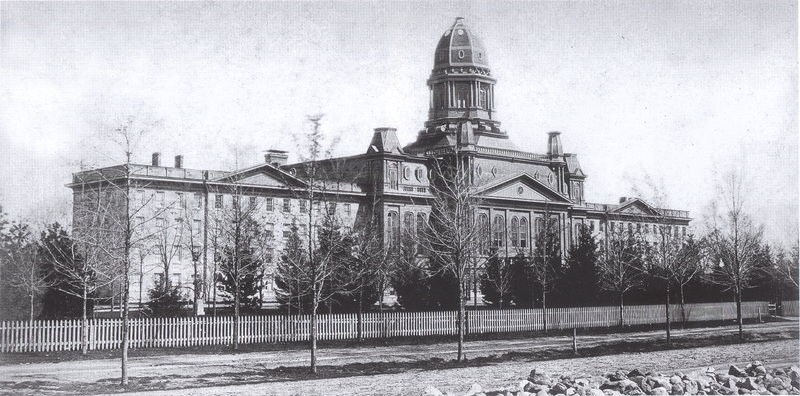
University Hall, University of Michigan
1965–1969 · The idea
What interested him was not a game so much as a question he thought students were too quick to assume away: why does social order exist at all? He opened the manual by refusing the easy answer.
When citizens riot, when governments use indiscriminate violence against their citizens, when generals seize power and liquidate political opponents, when armed gangs terrorize their neighbors, we begin to recognize that the existence of order and legitimacy is a mystery to be explained rather than part of the world’s natural organization.William A. Gamson, preface to the fifth edition, 1999
SIMSOC was built to put participants inside that mystery rather than describe it to them. It does not hand anyone a just society, and it deliberately does not tell them in advance where they will stand in it. Discovering that, and deciding what to do about it, is the exercise. Gamson expected the situation to do the teaching on its own: “Demands for inclusion and social justice inevitably generate conflict.” What participants take from it, he wrote, “will depend on what one puts into it.”
1969–2000 · Five editions
Five editions followed across three decades: 1969, 1972, 1978, 1991, and a final revision in 2000. Each pass simplified the rules and widened the audience. By the last edition SIMSOC could run for as many as ninety participants and shipped with selected readings from writers including Robert Putnam and Nicholas Lemann.
It travelled well beyond sociology departments. SIMSOC was run in introductory courses and graduate seminars, inside companies including MGM and Lucent Technologies, and by charitable organizations, local government agencies, and leadership programs.
In print, 1969–2000
1969
First edition
1972
Second edition
1978
Third edition
1991
Fourth edition
2000
Fifth edition
2000–2021 · After Michigan
Gamson himself had moved on from Michigan to Boston College, where he taught full time until 2000 and stayed close to the work long after. He retired in 2010 but remained engaged with SIMSOC for the rest of his life, until his death in 2021. Groups went on running the simulation throughout those years, though no further edition was published.
Running SIMSOC has always asked a great deal. A session wanted multiple separate rooms, a printed manual and a pencil for every participant, eight hours or more of scheduled time, and a coordinator holding the bank, the forms, and every transaction in the society by hand. SIMSOC Online automates nearly all of that bookkeeping, so a coordinator can spend a session running the simulation instead of running the numbers.
SIMSOC has been run in classrooms, leadership programs, and community organizations in dozens of countries.
—The Free Press, 1999
Building it online
SIMSOC ran on paper and pencil for fifty years. Over the past five years, we’ve built it into a working online platform.
2022 · Off Zoom, onto SpatialChat
The Gamson family founded SIMSOC Online, onboarding experienced SIMSOC coordinators Michael Strom and Lee Rosenthal for development. Early trials moved off Zoom onto SpatialChat, a proximity-based video platform, while the game itself still ran on Google Sheets and forms.
2023 · The first app
The team built the first version of the SIMSOC app, optimized for mobile and focused on the basic game mechanics. We ran early classroom tests with it, still paired with SpatialChat for video.
2024 · Testing in earnest
Development pushed past the first mobile release into a more robust in-browser build, with structured test sessions run to validate the game's mechanics.
2025 · A Stanford capstone
Lee brought SIMSOC into Stanford's design program as a capstone project, continuing to iterate on the app while still pairing it with SpatialChat for video. After testing with simulation-game developers, a final community playtest brought the best feedback yet.
2026 · A platform of its own
Michael and Lee founded Subsyst Simulations and now operate SIMSOC Online under exclusive license from the Gamson family. The app now handles the full experience in one place: game mechanics, video chat, private messaging, and a coordinator dashboard built to run a live session smoothly.
Our Team
Bringing SIMSOC online was one of Bill Gamson’s final wishes. Michael and Lee, both frequent SIMSOC coordinators in education, leadership training, and community service, connected with the Gamson family during the COVID-19 pandemic to help make that happen.
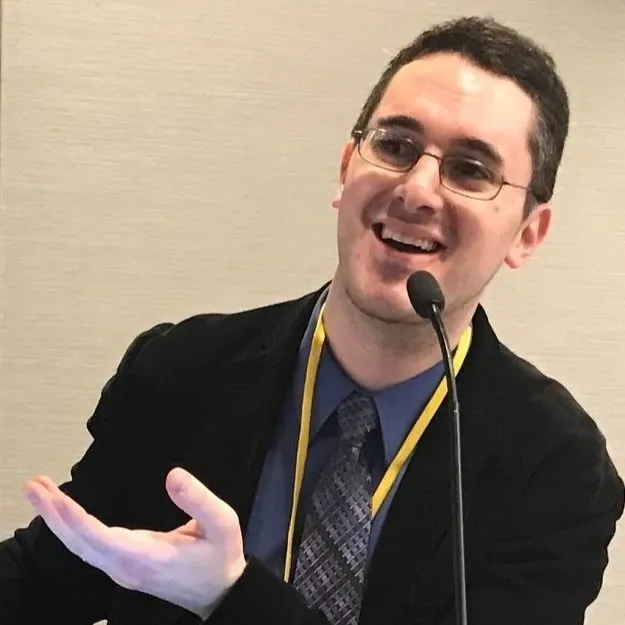
Michael Strom, MA
Co-Founder, Subsyst Simulations
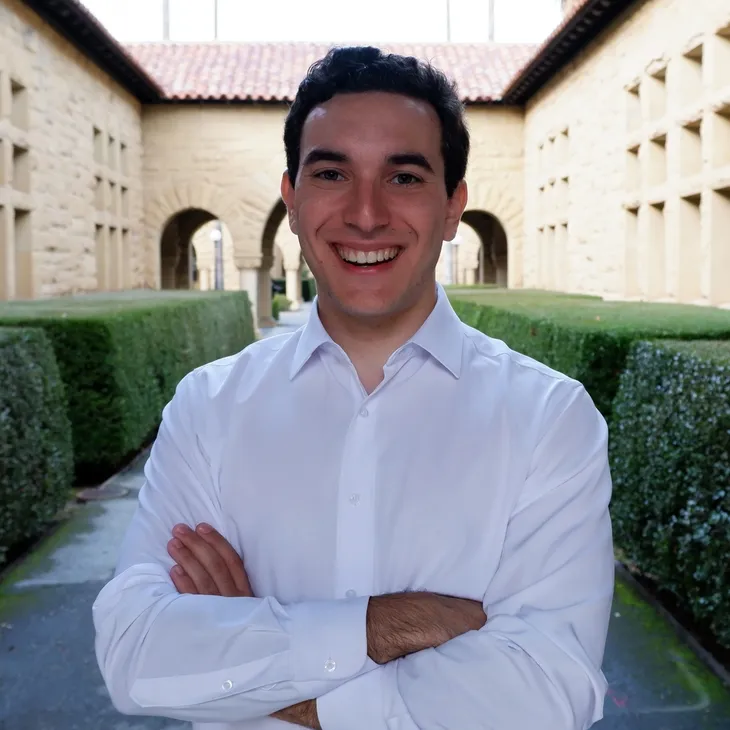
Lee Rosenthal
Co-Founder, Subsyst Simulations

Dr. Joshua Gamson
Rights Holder, SIMSOC Online
Where it goes next
SIMSOC has always depended on the people willing to run it. If you’re considering it for your course or program, we’d like to hear what you have in mind.
Get in Touch →