
Sociology
Social structure, inequality, institutions, collective behavior, and social change.
SIMSOC is an immersive social simulation where students become citizens of a functioning society: making decisions, navigating scarce resources, forming organizations, negotiating conflict, and experiencing the consequences of their choices.
The experience
Players receive different roles, resources, and constraints. Then they have to live with them. There is no single correct strategy and no conventional winner. What happens next is up to them.
How it teaches
SIMSOC isn’t a break from the syllabus. It’s the case study: one your students experience themselves and can’t dismiss as hypothetical.
Frame the concepts your course already covers (power, inequality, institutions, collective action) and set the questions you want students watching for.
Students enter the simulation and make consequential decisions under real scarcity, competing goals, and social pressure from their own classmates.
Reflect as a group on what actually happened. Who accumulated power, and how? Who was left out? What did the society optimize for, and what did that cost?
For coordinators
Before
Spreadsheets, envelopes, and a facilitator manually brokering every transaction.
Now
You don’t have to be a game master. And for your first run, you won’t be on your own. Our team has been running SIMSOC sessions for years, and we help you plan and coordinate it.
Where it fits
The same society supports very different learning objectives: what changes is what you ask students to watch for, and what you debrief afterward.
Social structure, inequality, institutions, collective behavior, and social change.
Power, legitimacy, governance, political conflict, and collective action.
Negotiation, competing interests, cooperation, escalation, and resolution.
Leading when goals, incentives, and group interests genuinely collide.
Organizational dynamics, incentives, influence, and decision-making under pressure.
Group formation, norms, in-group loyalty, conformity, and social influence.
Historically also run in graduate seminars, high-school and summer programs, leadership and diversity workshops, and with government officials, community organizations, and more. Tell us about your program →
In their words
Drawn from post-session feedback forms: undergraduates, high-school students, educators, and professional facilitators.
“That violence and conflict can erupt not because a group wants the violence, but because the group needs the violence to be heard as a cry for help.”Undergraduate, Loyola University Maryland
“SIMSOC is the ultimate teaching tool for sociology, systems thinking, design, and life. As societies and cultures become increasingly individualistic, SIMSOC opens our eyes to our interconnectedness.”Coordinator, East Los Angeles College
“I was struck by how easy it was to just assume that the other groups were in the same boat as mine. It prompted some good reflection on assumptions and privilege.”Participant, Interpretive Simulations
“Over the past few days it’s been all I can think about, and it is definitely something that could change the points of view for many people.”Student, New Jersey Scholars Program
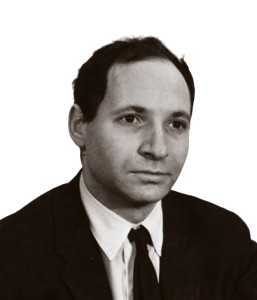
Est. 1969 · William A. Gamson
SIMSOC was created in 1969 by sociologist Bill Gamson, then a professor at the University of Michigan. Across five editions and more than fifty years, it became a fixture of social science teaching worldwide.
—The Free Press, across five editions and more than fifty years
Tell us about your course or program and what you want your students to explore. We’ll help you figure out the right way to run it.